How Radioactive Is Our Food? Bananas, Mushrooms, and the Potassium Trick
Strictly speaking, there is no radiation-free food. Plants pull natural radionuclides from the soil, animals eat the plants — and both end up on our plates. On average, everyone takes in an effective dose of about 0.3 millisieverts per year through food. That’s completely normal, and it has always been this way.
The banana as a yardstick
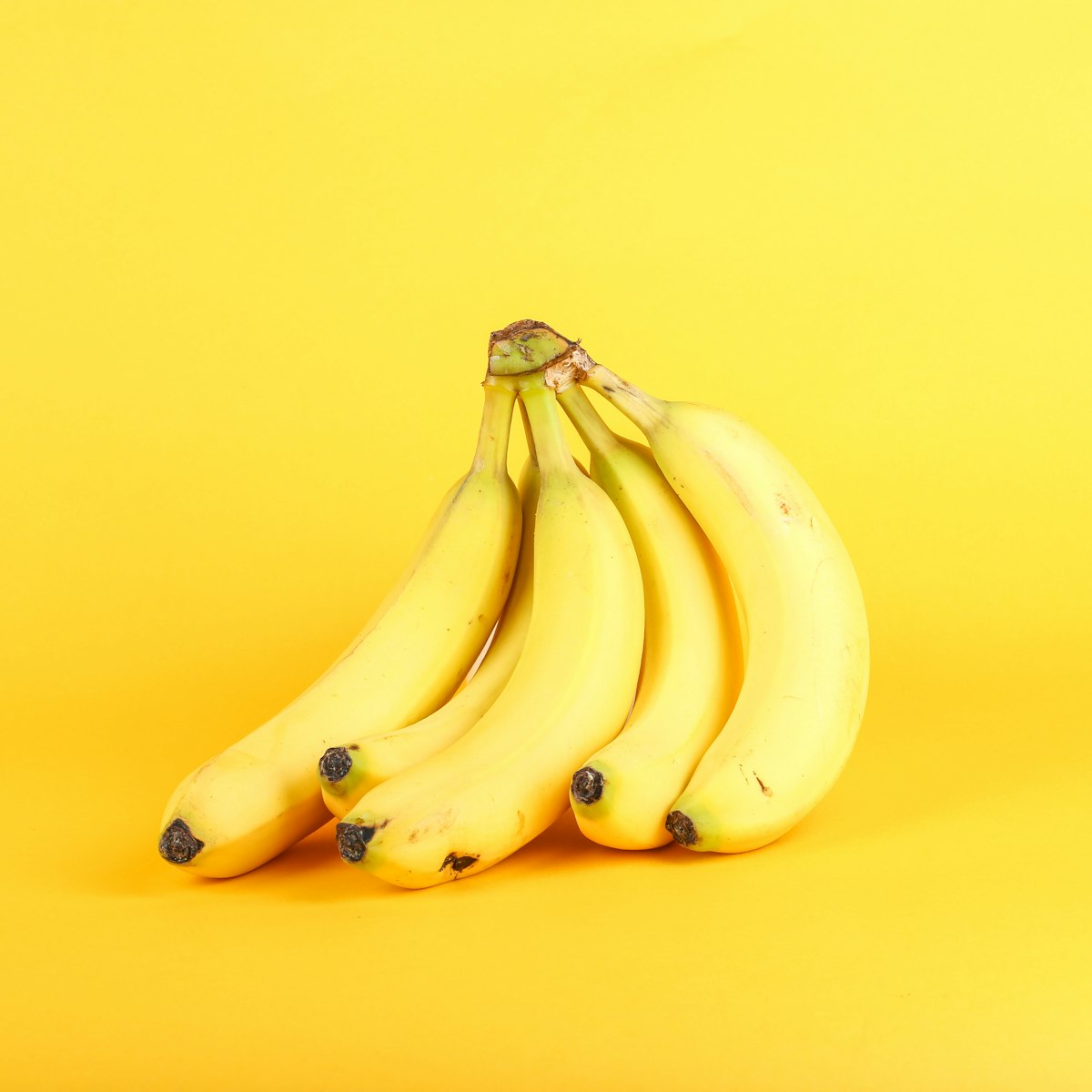
The most famous example is the banana: rich in potassium, and a tiny, fixed fraction of all potassium on Earth is radioactive potassium-40. On paper, one banana works out to about 0.1 microsieverts — physicists jokingly call it the “banana equivalent dose,” a way to make tiny radiation amounts tangible.
Here’s the twist: your body keeps its potassium balance constant. Eat more potassium, excrete more potassium. Bananas don’t “irradiate” anyone — they just illustrate how ubiquitous natural radioactivity is. Potatoes, nuts, dried fruit all carry potassium-40, and the human body itself hums along at several thousand becquerels.
The outliers
A few foods stand out:
- Brazil nuts concentrate radium through the tree’s roots — the champion among plant foods.
- Wild mushrooms and wild boar from certain regions of Europe still contain cesium-137 from the 1986 Chernobyl accident. Commercial products are monitored; only people who very frequently eat self-gathered mushrooms or game from affected areas raise their dose noticeably.
- Mineral water can carry more or less radium and uranium depending on the source — mainly relevant for infant formula.
Your plate in perspective
| Source | Dose per year (approx.) |
|---|---|
| All food combined (average) | 0.3 mSv |
| 2 Brazil nuts daily | +0.16 mSv |
| Weekly wild-mushroom meals from an affected area | up to a few tenths of a mSv |
| For comparison: radon at home (typical) | often 1–3+ mSv |
The message is reassuring: what we eat plays a bit part in our radiation exposure. If you actually want to cut your dose, don’t start with the fruit bowl — start with radon in your house, or with smoking, the most underrated radiation source of all.