How Much Radiation Do You Pick Up on a Flight to New York?
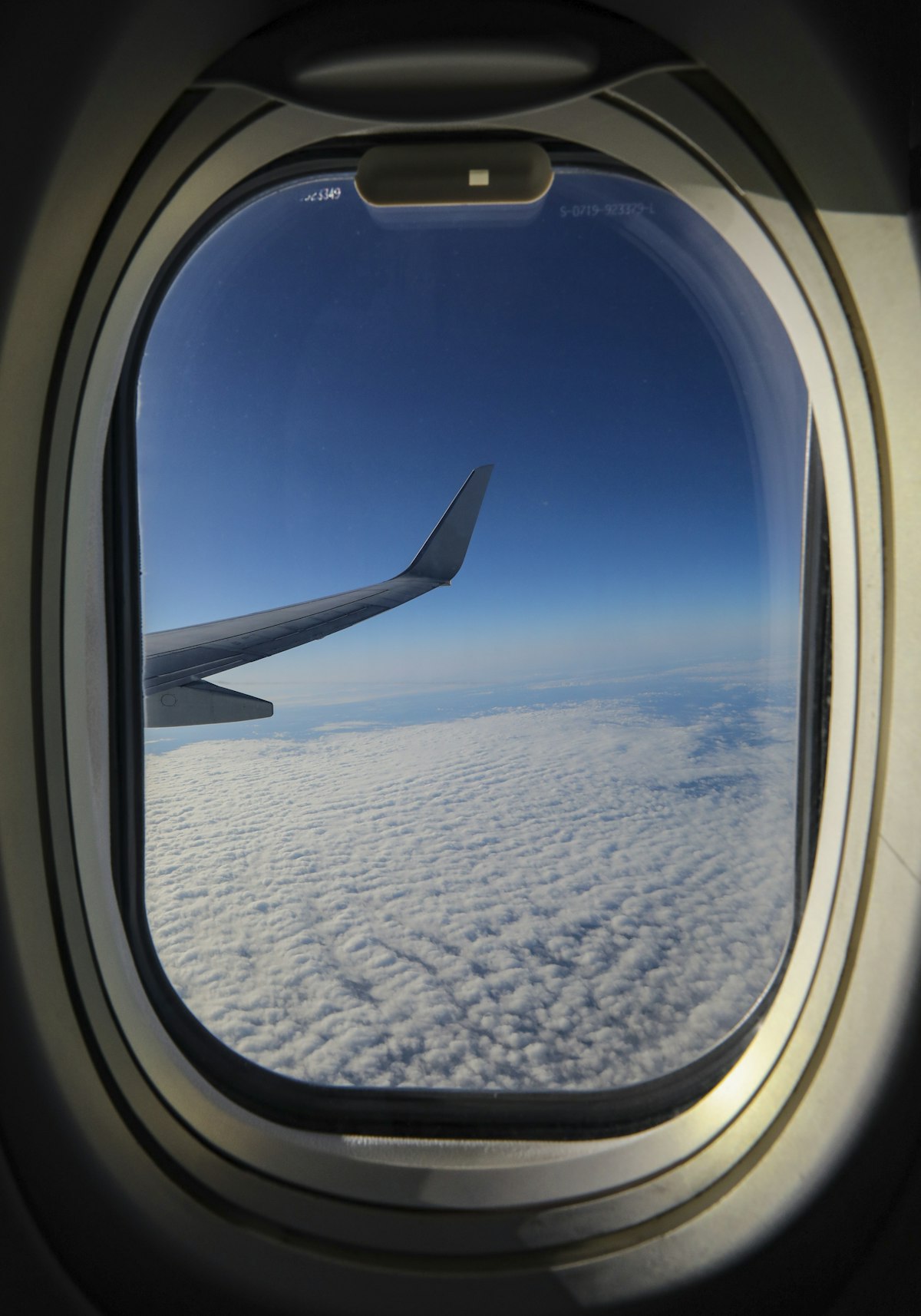
At cruising altitude the air is thin — including as a radiation shield. Cosmic radiation from space is normally absorbed by Earth’s magnetic field and the thick blanket of atmosphere. At 33,000–39,000 feet, much of that protection is missing: the dose rate up there is roughly 100 times higher than at sea level.
The numbers for a transatlantic flight
On a flight from Zurich or Frankfurt to New York (about 8 hours), you pick up — depending on route, altitude, and solar activity — roughly 0.04–0.06 millisieverts (mSv). Round trip: about 0.1 mSv, or 10 millirem.
What does that mean in practice? Comparison makes it tangible:
| Activity | Dose (approx.) |
|---|---|
| Europe–New York flight (one way) | 0.05 mSv |
| Single dental X-ray | 0.005 mSv |
| Dental cone-beam CT (CBCT) | 0.05–0.2 mSv |
| Average annual dose, U.S. resident | ~6 mSv |
A transatlantic flight is roughly equivalent to a small dental CBCT scan — or a few days of ordinary background radiation. Want the exact number for your route? The free flight dose calculator at kurse.dirkschulze.ch computes the dose for specific flights and compares it directly with a CBCT scan.
Why the route matters
Earth’s magnetic field deflects charged particles toward the poles. That means:
- Polar routes (e.g., Europe–U.S. West Coast over Greenland) collect more dose than equatorial ones.
- Higher means more: the dose rate at 39,000 feet exceeds that at 30,000 feet.
- Solar activity: after strong solar flares, radiation can spike briefly; in extreme events airlines reroute or fly lower.
Should you worry?
For vacation and business travelers: no. Even ten long-haul flights a year add up to about 0.5 mSv — a fraction of the natural annual dose. The math only changes for people who spend hundreds of hours a year in the air for a living — more on that in Frequent flyers and crew.